
The AQG 324 test standard provides comprehensive test methods for evaluating the performance of automotive power modules. This test standard was established by the European Center for Power Electronics (ECPE) in Europe and is intended for evaluating the characteristics of power electronic converter units (PCUs) that are primarily installed in vehicles weighing 3.5 tons or less. The formal title of AQG 324 is "Automotive Qualification Guideline 324." Based on the German LV324 standard, it defines common procedures for module characterization, as well as environmental and life tests for power electronic modules in automotive applications. The AQG 324 standard greatly contributes to improving the reliability of power electronics not only in the automotive industry but also in the railway and aerospace industries.
Main test contents
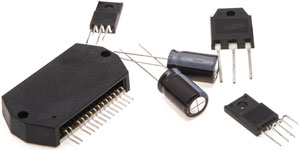
The following tests are used to verify the characteristics and service life of power electronic modules used in the automotive industry. The tests involve measuring the parameters of power semiconductor components such as IGBTs, MOSFETs, and diodes used in power electronics modules.
Characterizing module testing
- QC-01: Determining parasitic stray inductance (Lp)
- QC-02: Determining thermal resistance (Rth value)
- QC-03: Determining short-circuit capability
- QC-04: Insulation test
- QC-05: Determining mechanical data
Environmental Testing
- QE-01: Thermal shock test (TST)
- QE-02: Contactability (CO)
- QE-03: Vibration (V)
- QE-04: Mechanical shock (MS)
Lifetime Testing
This section explains the details of Lifetime Testing.
Lifetime tests are conducted to verify the reliability of power modules, and primarily involve applying thermal and electrical stress to evaluate the module's aging degradation and failure mechanisms. The contents of each test are explained below.
QL-01: Power Cycling - PCsec (Short Time)
Purpose: To evaluate thermal fatigue due to short duty cycles and investigate the degradation of bond wires and semiconductor joints.
Test method: The semiconductor element is repeatedly turned on and off to generate a sudden change in temperature. The focus will be on the "interconnection area near the chip" where temperature changes are greatest.
Evaluation: Observation of bond wire breakage and degradation of the die-attach layer (e.g., solder fatigue or cracks) due to thermal fatigue.
QL-02: Power Cycling - PCmin (Long Term)
Purpose: To investigate the degradation caused by thermal expansion and contraction of the entire module, especially the fatigue of solder joints between the substrate and the baseplate through long-term power-on/off cycles.
Test method: Unlike the short-term power cycle test, the heating and cooling periods are longer. The temperature change of the entire module is gradual, focusing on deterioration of remote parts such as the "chip-to-Printed circuit board (PCB) joint."
Evaluation: Check for cracks in the solder layer and peeling of the Printed circuit board (PCB).
QL-03: High-temperature storage (HTS)
Purpose: To evaluate material degradation due to long-term storage in a high-temperature environment.
Test method: Modules are stored in a high-temperature environment (e.g., 125°C) for a specified duration (e.g., 1000 hours). No electrical stress is applied, allowing the evaluation of temperature effects alone.
Evaluation: Checks for insulation deterioration, changes in sealing materials, and oxidation or embrittlement of internal connections.
QL-04: Low-Temperature Storage (LTS)
Purpose: To evaluate changes in material properties and the risk of brittle fracture in cryogenic environments.
Test method: Store the module in a low temperature environment (e.g. -40°C) for a certain period of time (e.g. 1000 hours). As with the high-temperature storage test, no electrical stress was applied and the low-temperature resistance of the material was investigated.
Evaluation: Evaluation includes checking for cracks in materials like the substrate and plastic housing, as well as deterioration of insulation performance.
QL-05: High-temperature reverse bias (HTRB)
Purpose: Apply reverse bias (voltage 80-100% of the rated voltage) at high temperature to evaluate the increase in leakage current and insulation deterioration.
Test method: The module is stored in a low-temperature environment (e.g., -40°C) for a specified duration (e.g., 1000 hours). As with the high-temperature storage test, no electrical stress is applied, and the low-temperature resistance of the material is investigated.
Evaluation: Checks for cracks in materials such as the substrate and plastic housing, as well as deterioration of insulation performance.
QL-06: High-temperature gate bias (HTGB)
Purpose: To apply gate voltage in a high-temperature environment and investigate the deterioration of the oxide film and the increase in leakage current.
Test method: The rated voltage is applied between the gate-emitter or gate-source in a high temperature (e.g. 150°C) environment.
Evaluate changes in characteristics after a certain period of time (e.g. 1000 hours).
Evaluation: Check for deterioration of the gate oxide film and increase in gate leakage current.
QL-07: High-Humidity, High-Temperature Reverse Bias (H3TRB or HHHTRB)
Purpose: To apply a reverse bias voltage in a high-temperature and high-humidity environment to evaluate insulation degradation caused by moisture.
Test method: Reverse bias is applied in a high-temperature (85°C) and high-humidity (85% RH) environment and maintained for a long duration (e.g., 1000 hours). The test investigates increases in leakage current due to humidity and the deterioration of insulation materials.
Evaluation: Checks for deterioration of insulation resistance, increases in leakage current, and dielectric breakdown.
Summary
Life testing is a critical process for evaluating the durability of power modules against environmental factors such as heat, electricity, and humidity. Key evaluation points include:
- Thermal cycle tests (PCsec, PCmin): Evaluate joint deterioration caused by thermal fatigue.
- High/Low-temperature storage tests (HTS, LTS): Investigate material degradation due to long-term temperature exposure.
- High-temperature bias tests (HTRB, HTGB, H3TRB): Evaluate changes in insulation and leakage current under voltage stress.
These tests are essential for ensuring the long-term reliability required for automotive power modules.
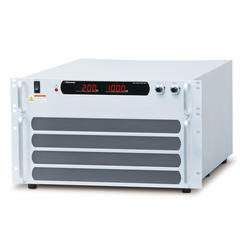
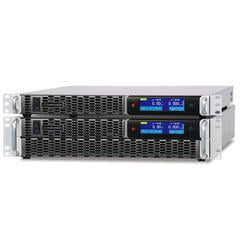
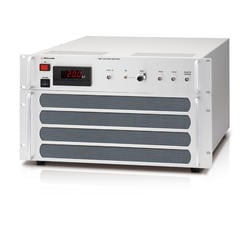
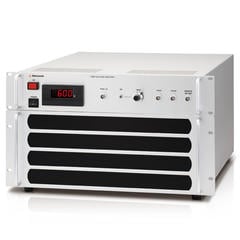
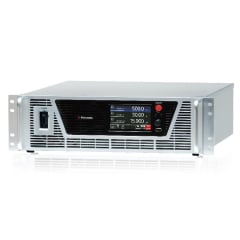
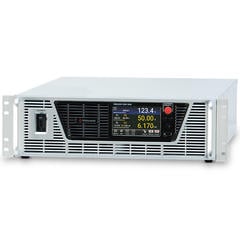
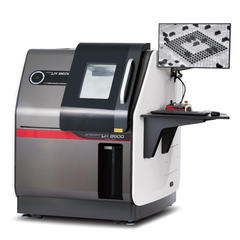
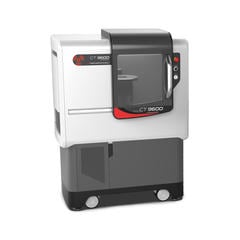
Matsusada Precision offers a comprehensive lineup of DC power supplies, high-voltage power supplies, and regenerative power supplies ideal for AQG 324 compliance testing. We also provide high-precision X-ray inspection systems and X-ray CT scanners essential for the non-destructive analysis of semiconductor modules.
- Related Terms:
-
- AQG 324
- LV324
- SiC-MOSFET
- SiC-SBD
- SiC-diode
- Power semiconductor
- Leakage current
- X-ray
- CT