
Vacuum plasma treatment (low-pressure plasma treatment) is a technology for cleaning and surface modification of materials by uniformly exposing the surface to plasma in a vacuum environment. It is used in a wide range of fields, from the manufacture of semiconductors and electronic components to medical applications.
Plasma treatment cleans material surfaces by decomposing and vaporizing microscopic organic contaminants. It also modifies the surface by breaking molecular bonds and altering its chemical composition. In addition, plasma can introduce functional groups, such as hydroxyl groups (-OH), onto the material's surface. This process, known as surface functionalization, makes the surface hydrophilic (water-attracting) and improves its wettability.
For example, in the fabrication of microfluidic devices, vacuum plasma treatment is used to increase the hydrophilicity of patterned PDMS (polydimethylsiloxane) surfaces, which is a crucial step for bonding PDMS to other substrates like glass. Plasma is generated within the vacuum chamber by applying power, typically high-voltage DC or radio-frequency (RF), to a process gas via electrodes.
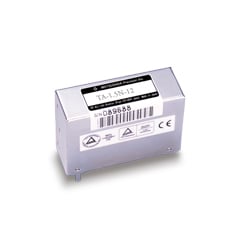
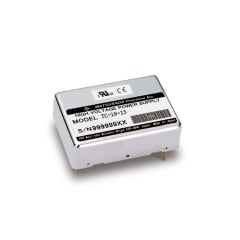
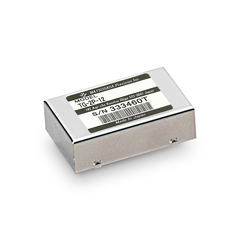
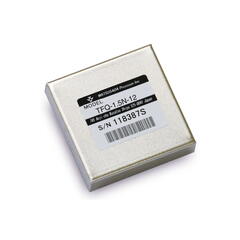
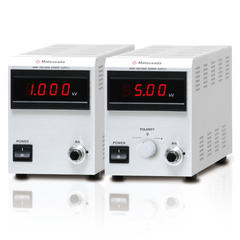
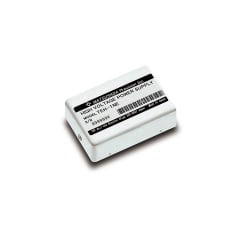
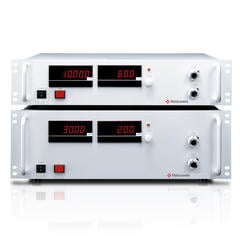
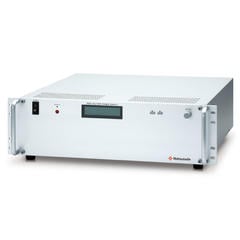
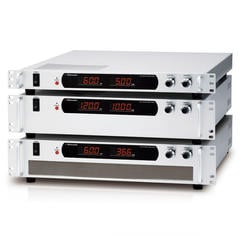
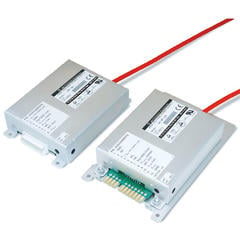
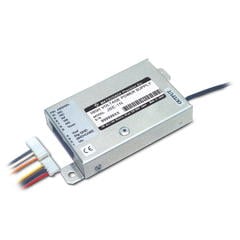
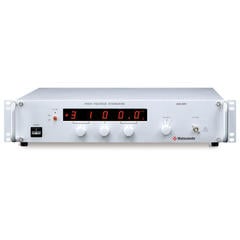
Matsusada Precision offers a wide range of high-voltage power supplies optimized for generating and sustaining plasma by powering electrodes and other plasma source components.

- Related Terms:
-
- Plasma
- Semiconductor
- Surface Treatment
- Langmuir probe
Recommended products
High-voltage power supplies optimized for vacuum plasma processing.