


Nondestructive Testing (NDT) is a group of analysis techniques used to evaluate the properties of materials, components, or systems without causing damage or permanently altering the inspection target. By utilizing methods such as X-ray radiography and ultrasonic testing, engineers can detect internal flaws and characterize materials while maintaining the integrity of the object.
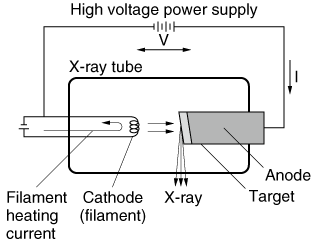
X-ray Inspection Systems utilize an X-ray tube as a radiation source. During inspection, X-rays penetrate the target object, and the transmitted radiation is captured by a detector, such as a Flat Panel Detector (FPD). The resulting images allow for the non-invasive identification of internal defects, corrosion, and other structural inconsistencies.
Ultrasonic Testing (UT) employs an ultrasonic transducer equipped with a piezoelectric element. When a high-frequency electrical signal is applied, the element vibrates to generate ultrasonic waves. These waves propagate through the object, and the reflected waves (echoes) are analyzed to locate internal flaws or measure thickness.
Matsusada Precision provides a comprehensive range of solutions for nondestructive testing. Our lineup includes complete X-ray inspection systems, high-voltage power supplies optimized for X-ray tubes, and high-speed power amplifiers for driving piezoelectric elements in ultrasonic transducers.
- Related Terms:
-
- Radiographic Testing (RT)
- Ultrasonic Testing (UT)
- Eddy Current Testing (ET)
- Magnetic Particle Testing (MT)
- X-ray Inspection
Recommended products
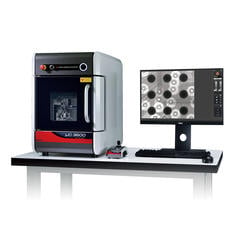
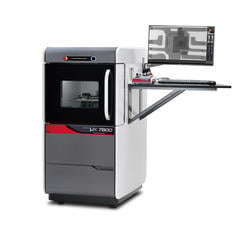
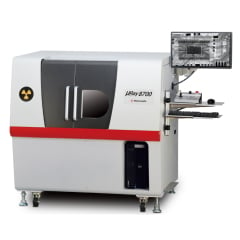
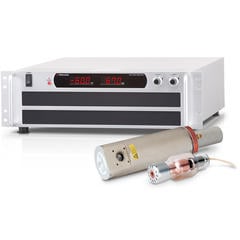
Matsusada Precision offers a wide range of nondestructive testing equipment, including X-ray nondestructive testing equipment, high-voltage power supplies for X-ray tubes, and high-frequency power supplies for driving piezoelectric elements.
Related Technical Articles
- Non-Destructive Testing: Types and Applications
- What are X-rays? (Basic Knowledge)
- Selecting an X-ray Inspection System
- Principles of Radiography
- Safe Operation of X-ray Inspection Systems
- What is the difference between Radioactivity, Radiation, and Radioactive Materials?
- Understanding Radiation: Effects on the Body and X-ray Safety
- What is Microfocus X-ray Technology? (Basic Knowledge)
- Basics and Principles of Computed Tomography (CT)
- How to Acquire High-Quality Computed Tomography (CT) Images - X-ray NDT series (1)
- A Guide to X-ray CT Images: Formats, Viewing, and Applications - X-ray NDT series (2)
- X-ray Image Processing and Automated Inspection - X-ray NDT series (3)
- Types of X-ray Tubes and High-voltage Power Supplies
- What is X-Ray Fluorescence? (Basic Knowledge)