
A Marx generator is a high-voltage generator circuit designed to produce high-voltage pulses from a lower-voltage DC input.
A Marx generator consists of multiple stages, each containing resistors, a high-voltage capacitor, and a spark gap. Initially, a high-voltage DC source charges all the capacitors in parallel. Once the charging voltage reaches the breakdown threshold of the first spark gap, it triggers a discharge. This discharge causes a cascading breakdown of all subsequent spark gaps, which effectively connects all the capacitors in series. This process results in an extremely high output voltage pulse, equivalent to the sum of the voltages on the individual capacitors.
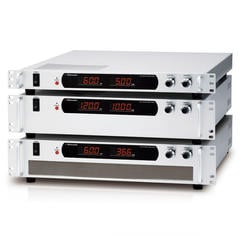
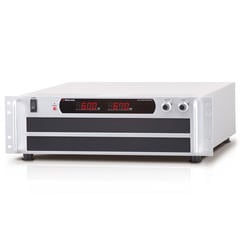
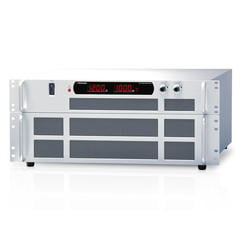
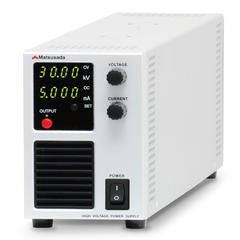
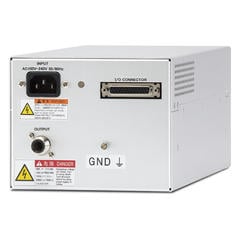
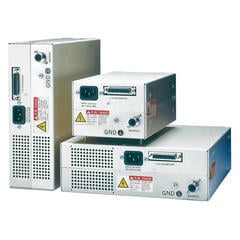
Marx generators can produce extremely high voltages, often exceeding several hundred kilovolts (kV). Due to this capability, they are commonly used in high-energy physics research, for testing the effects of lightning on equipment, and in various industrial applications. Matsusada Precision offers a wide range of high-voltage power supplies ideal for charging the capacitors used in Marx generators.

- Related Terms:
-
- Impulse
- Capacitor
- Lightning
- Charging
- Pulse Forming Networks (PFNs)
Recommended products
Matsusada Precision offers a wide range of high-voltage power supplies optimized for capacitor charging in Marx generator applications.