

How an ion pump works
An ion pump, also known as a sputter ion pump, is a type of vacuum pump used to create ultra-high vacuum (UHV) conditions. Ion pumps are capture pumps that operate without moving parts.
| Low vacuum range | High vacuum range | |
|---|---|---|
| Pump type | Rotary pump Diaphragm Pump Dry Scroll Pump |
Ion pump Turbomolecular Pump Cryopump Oil Diffusion Pump |
| Fluid | Viscous flow | Molecular flow |
| Effect of Conductance | Small | Large |
| Exhaust Diameter | Small | Large |
| Flange example | NW16-40 | ICF70-406 |
The ion pump consists of a powerful magnet, a honeycomb-structured anode array, and a titanium cathode, arranged with the anode between the cathodes. A key characteristic of the ion pump is that, unlike a rotary pump, it has no mechanical moving parts.

When a cold cathode discharge occurs in a magnetic field, the electrons emitted from the electrodes move back and forth between the cathodes in a spiral motion due to the action of the magnetic field.
When the electrons collide with gas molecules, the gas molecules are ionized and become ions. When these ions strike the cathode, they sputter (knock out) titanium atoms from its surface. The ions themselves are also embedded (or buried) within the cathode material.
In addition, the sputtered titanium atoms form a clean titanium film, called a getter film, on the anode, cathode, and inner walls of the pump. Since the sputtered titanium atoms are chemically active, they adsorb surrounding gas molecules as they form the film.
Gases such as hydrogen, oxygen, nitrogen, and carbon monoxide, as well as inert gases such as helium, are ionized and thus embedded in the cathode or adsorbed by the titanium atoms. As a result, the number of gas molecules in the surrounding environment decrease. In this way, the ion pump creates a vacuum state.
(1) Electrons are ejected from the titanium cathode by high voltage and move back and forth between the cathodes in a spiral motion.
(2) The electrons collide with gas molecules, and the gas molecules are ionized to form ions.
(3) The ions collide with the titanium cathode, sputtering (knocking out) the titanium atoms and embedding them in the cathode.
(4) In addition, the sputtered titanium atoms form a titanium film called a getter film, which adsorbs gas molecules.
Unlike momentum transfer pumps (such as turbomolecular pumps) that exhaust gas physically, ion pumps operate as entrapment pumps. They create a vacuum by ionizing gas molecules and trapping them chemically or physically onto the cathode material. As the gas density decreases, the discharge current drops proportionally, allowing the pump current to serve as a reliable indicator of vacuum pressure.
The ion pump is characterized by its ability to achieve a high degree of vacuum regardless of the type of gas. For this reason, they are used in transmission electron microscopes, electron beam lithography equipment, accelerators, and semiconductor manufacturing equipment.
Features of ion pumps
The advantages and disadvantages of ion pumps are as follows.
- Simple configuration of anode, cathode, and magnetic field with no mechanical moving parts
- No mechanical vibration or noise, and no effect on the operation of other equipment
- High reliability and long service life due to the absence of mechanical moving parts.
- Ultra-high vacuum (10-10Pa) can be achieved.
- The pump current is proportional to the pressure, allowing it to serve as a built-in vacuum gauge in the high and ultra-high vacuum ranges.
- Unlike rotary pumps and oil diffusion pumps, no oil is used.
- Does not contaminate the exhaust system even when stopped suddenly, and is suitable for unmanned operation.
- Requires only a power supply connection, allowing for flexible mounting orientations and installation layouts.
- Energy saving because the power consumption decreases as the air pressure decreases.
- Requires high voltage due to cold cathode discharge between anode and cathode.
- Limited pumping speed for high gas loads; requires an operating pressure below 1 Pa (high vacuum) to initiate effectively.
- Since roughing out is necessary, other pumps must be used in combination.
- To achieve ultra-high vacuum, a bakeout of the entire system, including the pump, is required to drive out adsorbed gases like water vapor from the internal surfaces.
- Since the cathode is sputtered, it has a lifetime.
One of the major advantages of ion pumps is that they can achieve a high vacuum without mechanical vibration or noise because of their simple mechanism of applying voltage to electrodes in a magnetic field. For this reason, they are widely used as vacuum pumps for electron microscopes and semiconductor manufacturing equipment, which require both high vacuum and fine control.
Ion pumps themselves are not very large, and even the largest ones are usually small enough to fit on a desk.
Since the power consumption drops when there is no more gas that can be exhausted, and there is no backflow of oil or other contaminants to contaminate the area being exhausted even if the pump should stop, it is suitable for unattended operation for long periods of time, and is also widely used as a vacuum pump to maintain a
vacuum.
On the other hand, one disadvantage is that it is difficult to pump at high flow rates. In most cases, the start-up pressure of ion pumps is around 1 Pa. Therefore, in order to obtain an ultra-high vacuum, it is common to create a high vacuum state with another pump in advance, and then use the ion pump to perform the final pumping and maintenance.
In addition, if impurities are adsorbed inside the pump, they will interfere with the pumping, so baking must be performed beforehand to remove the impurities. In addition, the titanium of the cathode is sputtered and deposited on the inner walls of the pump and other parts, so it has a life span. The equipment needs to be replaced at the appropriate time. Another disadvantage of ion pumps is that they require high voltage. Commercially available ion pumps are made to operate at 3kV, 5kV, or 7kV. In addition, power supplies with currents and powers ranging from tens of watts to hundreds of watts are used, depending on the pumping speed and size.
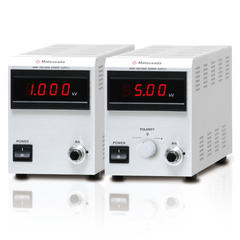
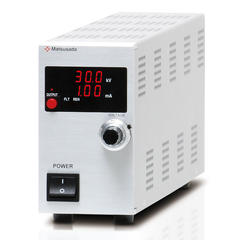
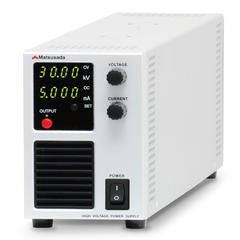
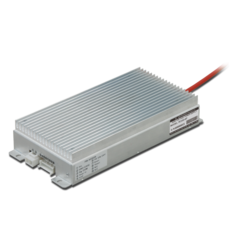
Matsusada Precision has a lineup of modular power supplies and dedicated power supplies for ion pump operation. These power supplies not only supply power to the ion pump, but can also monitor vacuum conditions by accurately detecting minute changes in current.
-
ULVAC, Inc.
ULVAC SHOWCASE - Ion Pump -
Canon ANELVA Inc.
Ion Pump/Noble Pump -
Agilent Technologies, Inc. (formerly Varian)
Ion Getter Pumps & Ion Pump Controllers -
Gamma Vacuum, Inc.
Products
- Related Terms:
-
- Vacuum pump
- ultra-high vacuum
- Turbomolecular Pump
- Cryopump
- Oil Diffusion Pump
- Rotary pump
- Diaphragm Pump
- Dry Scroll Pump