
Published: Modified:
Capacitor charging is a process used to store electrical energy in a capacitor bank to generate high instantaneous power in short bursts. This technique is fundamental to pulsed power engineering and applications requiring rapid energy release.
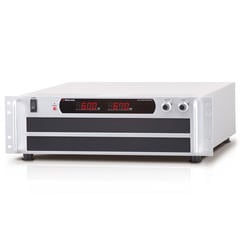
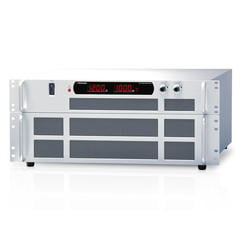
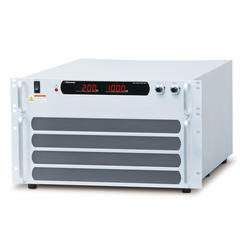
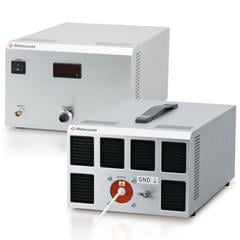
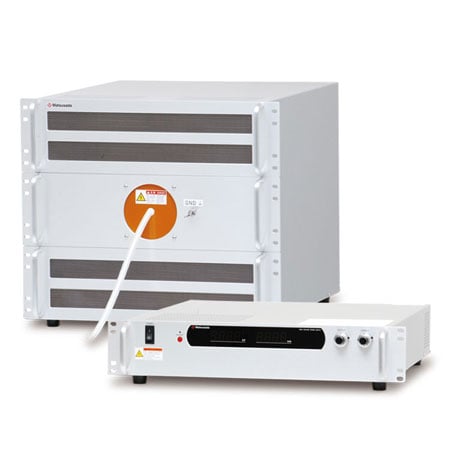
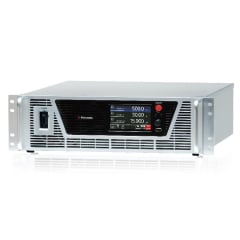
While standard DC power supplies are often limited by overcurrent protection when facing the high inrush currents of an uncharged capacitor, specialized high-voltage power supplies are engineered to handle these demanding charge-discharge cycles reliably. Using a general-purpose power supply for repetitive charging can lead to component stress and premature failure.
Typical Applications: Capacitor charging is widely used for flashlamp drivers, Pockels cells, laser diode (LD) drivers, pulse forming networks (PFN), and Marx generators. It is also critical in fields such as:
- Medical & Biotech: Lithotripsy, automated external defibrillators (AED), and sterilization systems.
- Industrial & Inspection: Circuit breaker testing, lightning simulators, welding, and electrostatic precipitators.
- Research & Physics: Particle accelerator beam injection, pulsed plasma studies, rail guns, and coil guns.
To ensure the selection of a reliable power supply, proper sizing is crucial. Please refer to our technical datasheets or contact us with your specifications--including capacitor capacitance, target voltage, desired charging time, and repetition rate. Our engineers will assist you in configuring the optimal solution.
- Related Terms:
-
- flashlamp driver
- Pockels cells
- laser diode (LD)
- pulse forming network (PFN)
- Marx generators
- Pulse Generators
- circuit breaker testing
- kidney stone crushing
- Detonator
- accelerator beam injection
- rail guns
- coil guns
- stun guns
- automated external defibrillators
- lightning simulators
- pulsed plasma
- welding
- sterilization
- dust collection (Electrostatic precipitator)